
786 F. App’x 298 (2d Cir. 2019) (affirming in full arbitration award in favor of Union based on finding that employers violated the collective bargaining agreement by failing to apply its terms to certain employees)
Notable Case Category: Notable Cases
1621 Route 22 West Operating Co., LLC d/b/a Somerset Valley Rehabilitation and Nursing Center v. NLRB
725 F. App’x 129 (3d Cir. 2018) (upholding certification of Union and requiring employer to bargain, reinstating unlawfully eliminated nurse positions, and making all affected employees whole because of the employer’s anti-union retaliation)
Meridian Nursing & Rehab at Shrewsbury v. 1199SEIU United Healthcare Workers East
No. 17-2655 (SDW) (SCM) (D.N.J 2017) (enforcing arbitration decision ordering reinstatement and backpay for terminated worker with prejudgment interest)
Woodcrest Healthcare Center

The National Labor Relations Board held that the employer committed numerous unfair labor practices before and after the representation election by withholding improvements in health insurance benefits from bargaining unit employees, interrogating employees, and creating the impression of surveillance.
Woodcrest Healthcare Center, 360 NLRB No. 58 (2014)
Amalgamated Transit Union, Locals 1056 and 726 and N.Y. City Transit Auth.
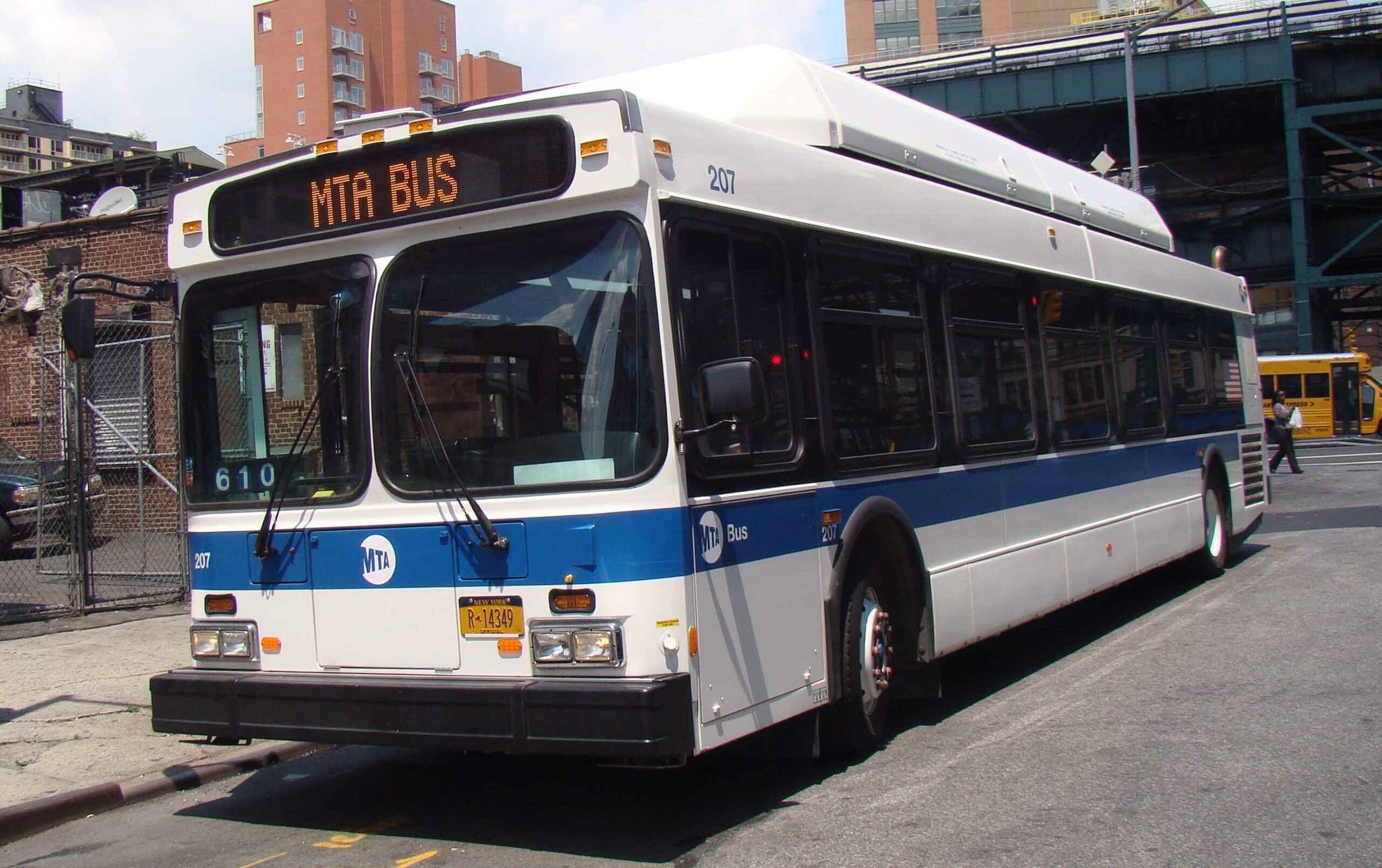
In this interest arbitration, the Panel rejected NYCT’s claim that it did not have the ability to pay and therefore should not be bound by the pattern set by TWU Local 100. For the period from January 15, 2009 to January 14, 2012, the Panel awarded two 2% raises in each of the first two years and a 3% raise in the third year of the contract, as well as a reduction in health insurance contributions. The Panel found that the reserve fund, savings in debt service, money set aside for contributions to the GASB fund, and the balance already in the GASB was more than ample to fund this contract even if this pattern was applied to the other MTA unions. The Panel also noted that money could be borrowed from the capital fund and that the MTA should try to renegotiate interest rate swaps with banks, which cost tax payers approximately $115 million dollars per year.
Amalgamated Transit Union, Locals 1056 and 726 and N.Y. City Transit Auth., TIA 2011-009 and 2011-010 (May 12, 2012) (Panel Chairman: Nicolau)
NLRB v. Regency Grande Nursing and Rehab. Ctr.
In these cases, the Third Circuit Court of Appeals enforced the NLRB’s orders (1) sustaining charges brought by 1199 SEIU that the employer unlawfully recognized a company union that lacked majority support, rejecting the employer’s defense that the charge, filed more than six months after the recognition, was time-barred because the recognition was fraudulently concealed; (2) requiring the employer to reimburse employees for the “union” dues deducted from their paychecks pursuant to the unlawful bargaining agreement with the company union; and (3) finding that the employer had unlawfully packed the bargaining unit just prior to a representation election by fraudulently hiring 40 illegitimate “employees” to thwart an 1199 SEIU victory, voiding the ballots of the phony workers, and hence certifying 1199 SEIU as the exclusive collective bargaining representative.
NLRB v. Regency Grande Nursing and Rehab. Ctr.,
265 F. App’x 74 (3d Cir. 2008), enforcing 347 NLRB 1143 (2006);
Regency Grande Nursing and Rehab. Ctr. v. NLRB,
2011 WL 3488995 (3d Cir. Aug. 10, 2011), enforcing 355 NLRB No. 99 (2010); and
NLRB v. Regency Grande Nursing and Rehab. Ctr.,
2012 WL 463999 (3d Cir. Feb. 14, 2012), enforcing 356 NLRB No. 146 (2011)
Sprain Brook Manor Nursing Home

The National Labor Relations Board ordered reinstatement with backpay for two workers fired in retaliation for organizing a union, and the restoration of overtime hours and back pay for three other union supporters whose hours were reduced after the union won a representation election. The Board also found that the Employer unlawfully photographed and placed under surveillance employees engaged in picketing, and that it further violated the law by calling the police and hiring an armed security guard in response to employees’ union activities.
Sprain Brook Manor Nursing Home, 351 NLRB 1190 (2007)
Mayor v. Council of N.Y.
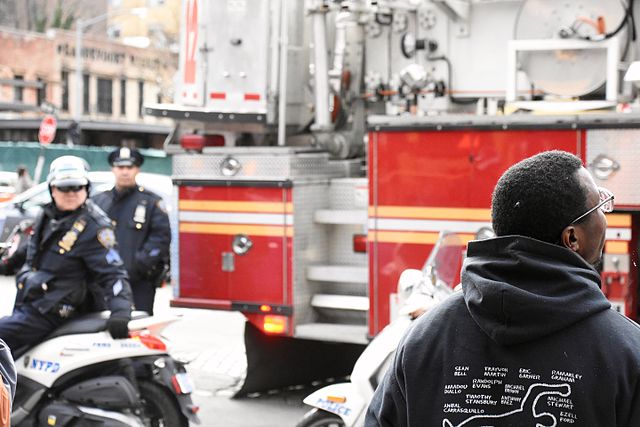
The Mayor of the City of New York challenged a law that significantly altered the bargaining rights of unions representing certain fire and emergency medical services employees. The law, passed by the City Council over the objection of the Mayor, expanded the scope of matters that could be bargained for these employees. The case turned on a variety of legal issues involving provisions of the Taylor Law (New York’s statute governing labor relations in the public sector), Home Rule provisions of the New York Constitution, and terms of the New York City Charter. The firm represented the unions whose bargaining rights were at stake in successfully fending off the Mayor’s challenge.
Mayor v. Council of N.Y., 91 N.Y.3d 23 (2007)
Verizon N.Y. Inc. v. NLRB

The D.C. Circuit Court of Appeals enforced the NLRB’s order finding that the employer’s practice of permitting employees to participate in blood drives on work time for up to four hours twice a year was a term and condition of employment that could not be unilaterally eliminated. The Court rejected the employer’s defenses that its decision to no longer provide this support for a charity was a core entrepreneurial concern that did not vitally affect employee terms and conditions of employment and that the Union waived its right to bargain over the change by failing to timely demand bargaining.
Verizon N.Y. Inc. v. NLRB, 360 F.3d 206 (D.C. Cir. 2004),
enforcing In re Verizon N.Y., Inc., 339 NLRB No. 6 (2003)
Transport Workers Union, Local 100 v. N.Y. City Transit Auth.
341 F. Supp. 2d 432 (S.D.N.Y. 2004) (enjoining employer’s sick leave policy, which required detailed medical disclosures in violation of the Americans with Disabilities Act, and holding that policy could ultimately be applied only to small group of employees with documented sick leave abuse)